
Ask ten composters about greens and browns and you'll get ten slightly different answers. Some swear by exact ratios. Some just chuck it all in and hope. For hot composting, getting this bit right is the difference between a bin that steams at 60°C and one that sits there sulking.
I run a HOTBIN and a Green Johanna with the Winter Jacket at home, and the greens and browns balance is the thing I think about most when I feed them. So here's how it actually works, in plain terms, with the mistakes I've made along the way.
What greens and browns really mean
Greens and browns is just gardener shorthand for two types of material.
Greens are your nitrogen. Wet and soft, and quick to rot down. Think food scraps, grass clippings, coffee grounds, tea leaves. They feed the bacteria and get the bin heating.
Browns are your carbon. Drier and tougher, and slower to break down. Cardboard, shredded paper, woodchip, dry autumn leaves. They give the bacteria energy and, just as importantly, they hold the material open so air can move through it.
The bacteria doing all the work want a rough balance of the two. Too much green and the bin goes wet, smelly and slows down. Too much brown and it never gets going. You're aiming for the sweet spot in between.
The ratio question (and why I don't stress about it)
You'll see the so-called correct ratio quoted as 25 or 30 parts carbon to 1 part nitrogen. That's the science, and it's true. But nobody stands over their bin weighing carbon atoms.
In real life, aim for roughly equal parts greens and browns by volume as your starting point. If your greens are very wet, like a caddy full of grass clippings, push the browns up to about two parts brown to one part green to soak up the extra moisture.
For hot composting specifically, temperature and airflow matter more than hitting a ratio on the nose. A bin at 55°C with slightly wonky ratios will out-compost a perfectly balanced one that's gone cold and airless. So get it roughly right, then let the bin tell you if it needs adjusting.
Honestly, I've stopped measuring. Greens bring the heat, browns keep the air moving. Get them roughly even and let the bin tell you the rest.
The greens list
These are your nitrogen sources. They bring the heat.
- Fruit and vegetable peelings and scraps
- Fresh grass clippings
- Coffee grounds and tea leaves (check the bags are plastic-free)
- Spoiled fruit and veg
- Manure from chickens, cows or horses
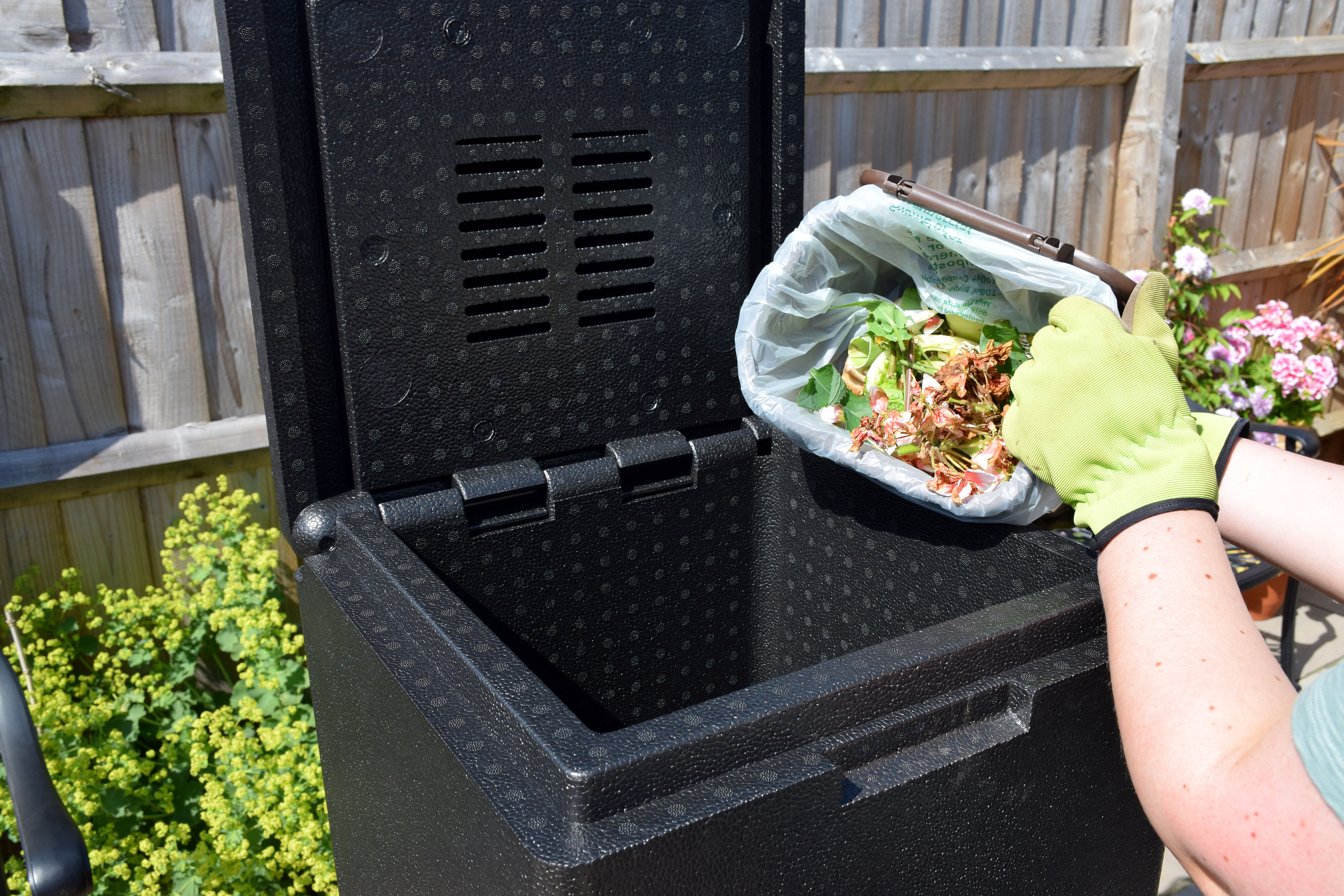
Grass is the one to watch. It heats a bin fast, but on its own it mats into a wet, slimy, airless mess. If you're adding a lot, mix it with woodchip, a rough rule of thumb is about four parts grass to one part woodchip, plus a bit of shredded paper. Don't just drop a thick layer of clippings in and walk away.
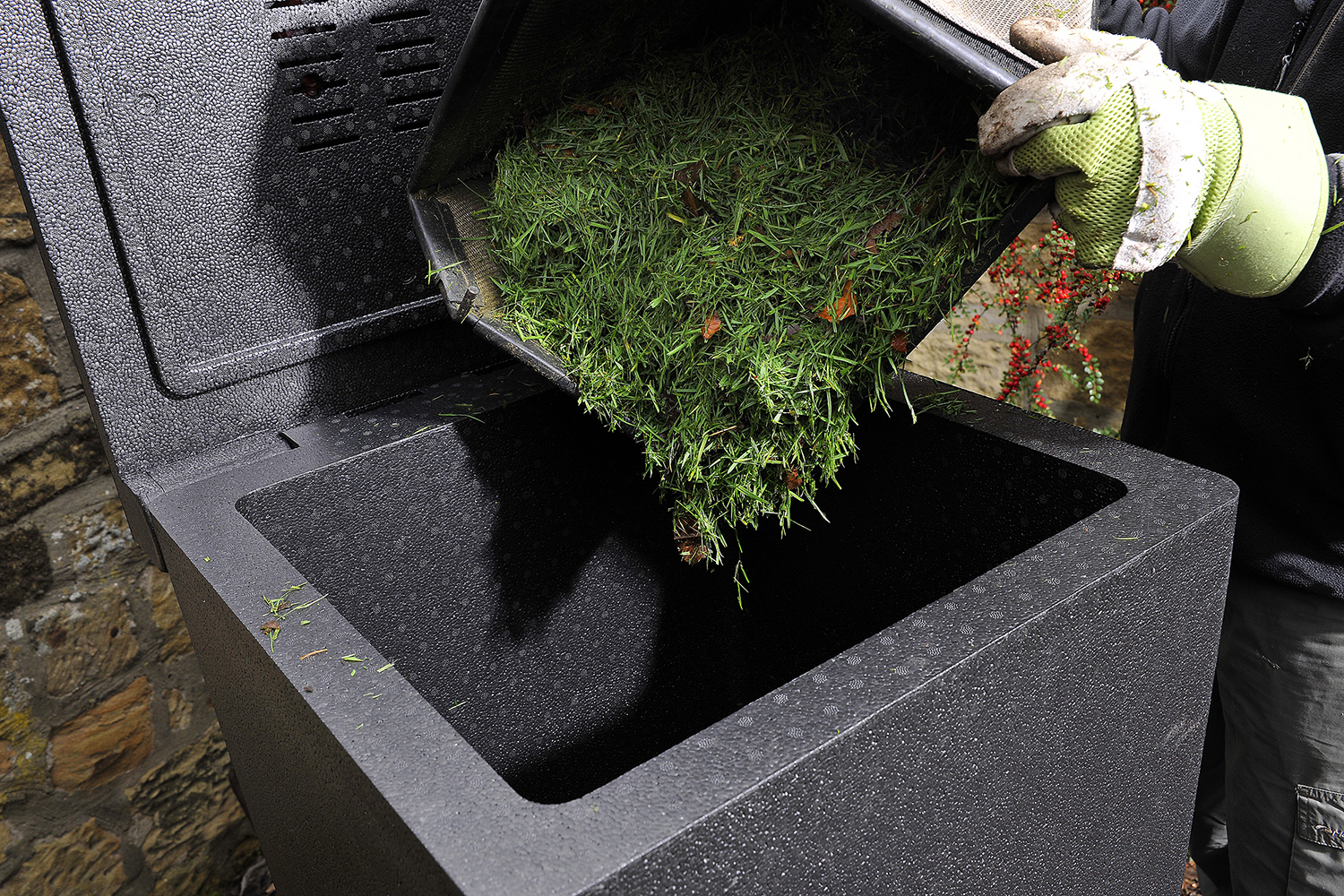
Someone emailed me last summer convinced their bin was broken because it stank. They'd tipped a whole mower bag of fresh clippings straight in, in one go. It had gone slimy and reeked of ammonia. No fault at all, just far too much green and nothing dry to balance it. A few handfuls of shredded paper and woodchip mixed through, and it came right within days.
A quick note for HOTBIN and Green Johanna owners: both bins take cooked food, which most cold heaps can't handle. With the HOTBIN, add cooked food only once the bin's up above 40°C. Those still count as greens.
The browns list
These are your carbon sources. They keep the whole thing breathing.
- Cardboard (tape and labels removed)
- Shredded paper
- Woodchip
- Dry autumn leaves
- Straw and small twigs
Two of these do different jobs. Woodchip is structural. It props the material open and creates the air gaps that stop the bin going anaerobic. Shredded paper is absorbent. It soaks up excess moisture and stops things turning to sludge. You want both on hand.
Crushed eggshells often get listed as a brown. They are fine to add, but they are not really a carbon source and they will not do the job browns are there for. Treat them as a bonus rather than part of your balance.
One material to leave out: sawdust. It's fine and dusty, so it packs down tight, blocks the air and turns the bin sour. Woodchip does the structural job properly. Sawdust does the opposite.
No woodchip to hand? Scrunched-up corrugated cardboard or chopped woody stems do a similar job of holding the material open. Not quite as good as woodchip, but they'll keep the air moving in a pinch.
How I actually feed the bin
Here's the method I use, and it's simpler than the ratio talk makes it sound.
- Add a load of food waste or greens.
- Cover it with a layer of browns, mostly shredded paper and a scatter of woodchip.
- Give the top a mix with the raking stick or aerator to fold the fresh stuff in.
For my HOTBIN, the woodchip rule of thumb is about one handful of woodchip for every five handfuls of waste. Not a lot, but skip it and you'll know about it.
Chop bigger items down to around 2.5 to 5cm before they go in. More surface area means the bacteria get to work faster. A whole cabbage stalk will sit there for weeks. Chopped, it's gone in days.
Reading the bin
Your bin tells you when the balance is off. Learn these three signs and you'll never need to weigh anything.
Ammonia smell (sharp, like a nappy bin). Too much green. Add browns, mostly shredded paper and cardboard, and mix them in. A big dump of grass clippings is the usual culprit.
Rotten, eggy smell. Not enough air, usually because it's too wet and packed down. Add woodchip for structure and mix to get some oxygen in.
Cold and doing nothing. Either too dry or short on greens. Do the squeeze test first. Grab a handful and squeeze. It should feel like a wrung-out sponge, damp but not dripping. If it's bone dry, add wet greens or a splash of water. If the moisture's fine, it just needs more nitrogen, so feed it some fresh food waste or grass.
That squeeze test is the single most useful check I know. I do it without thinking now.
The mistake I made
When I first set up my HOTBIN, I was so worried about it going wet and smelly that I was far too cautious with the greens. Loads of shredded paper and cardboard, barely any food waste.
The bin stayed cool and sluggish and I could not work out why. There was not enough green in there to feed the bacteria and get them warm. Once I started adding proper food waste and a bit of grass, it climbed to temperature within a couple of days. First time I lifted the lid and saw steam coming off it at around 60°C, I was genuinely chuffed.
So if your bin is cold and you have been cautious with the greens, that is very likely your problem. Feed it.
Worth saying that a cold bin has two common causes, and this is only one of them. The other is air. If your bin is cold but there is plenty of fresh waste in it, the material has probably packed down and needs woodchip and a loosen rather than more food. I have covered that side of it in how to start a hot composter.
Stockpile your browns
The one bit of forward planning that makes life easier: keep a stash of browns next to the bin.
Most people run out of browns, not greens. Kitchen waste turns up every single day. Cardboard and dry leaves don't. So when autumn leaves drop, bag some up. Keep a box of shredded paper and a bag of woodchip by the bin. Then every time you tip in a caddy of food waste, you've always got something dry to cover it with.
Get that habit going and the balance mostly looks after itself.
Further reading
- HOTBIN 200L Hot Composter
- Green Johanna 330L Hot Composter
- Green Johanna 330L Hot Composter: a complete guide
- Hot Composters range
- What is compost
I'm Adam, the founder of Compost Guy. I'm passionate about empowering people to embrace composting! Whether you're a seasoned composter or just starting your journey, I'm here to help.


