
A hot composter can turn your food and garden waste into compost in a few months instead of a year or more. It does this by holding its heat, so the bacteria inside work fast. Get the start right and it more or less runs itself. Get it wrong and it sits there doing nothing, which is exactly what puts a lot of people off in the first few weeks.
I run two hot composters at home. A HOTBIN, and a Green Johanna with the Winter Jacket on it. So most of what follows is what I have learned from actually using them, not just the theory.
This guide covers how to set a hot composter up, what to do in the first few weeks, what to watch for, and how to read what your bin is telling you so you can sort small problems before they turn into big ones.
What a hot composter actually needs
Four things, and they matter far more than any exact recipe.
- Food. A mix of wet "greens" like kitchen scraps and grass, and dry "browns" like shredded paper, cardboard and woodchip.
- Air. Oxygen has to move through the material. This is the one most people get wrong.
- Moisture. Damp like a wrung-out sponge, no wetter.
- Heat retention. The insulated walls of the bin keep the warmth in, which is what speeds everything up.
In plain terms, greens are your nitrogen and browns are your carbon. The bacteria work best with a rough balance of the two. There is more on getting that balance right in my guide to greens and browns.
Think of it like a wood burner. The browns are your logs, the slow fuel that also lets air move through the pile. The greens are the kindling that gets it going. Starve it of air and it just smoulders and smells. Done well, a hot composter runs at 40 to 60°C, and at those temperatures it breaks down far faster than a cold heap. HOTBIN put the difference at up to 32 times, though a lot depends on how neglected the cold heap was to begin with.
Getting the location right
This is where my two bins differ, so check what yours needs.
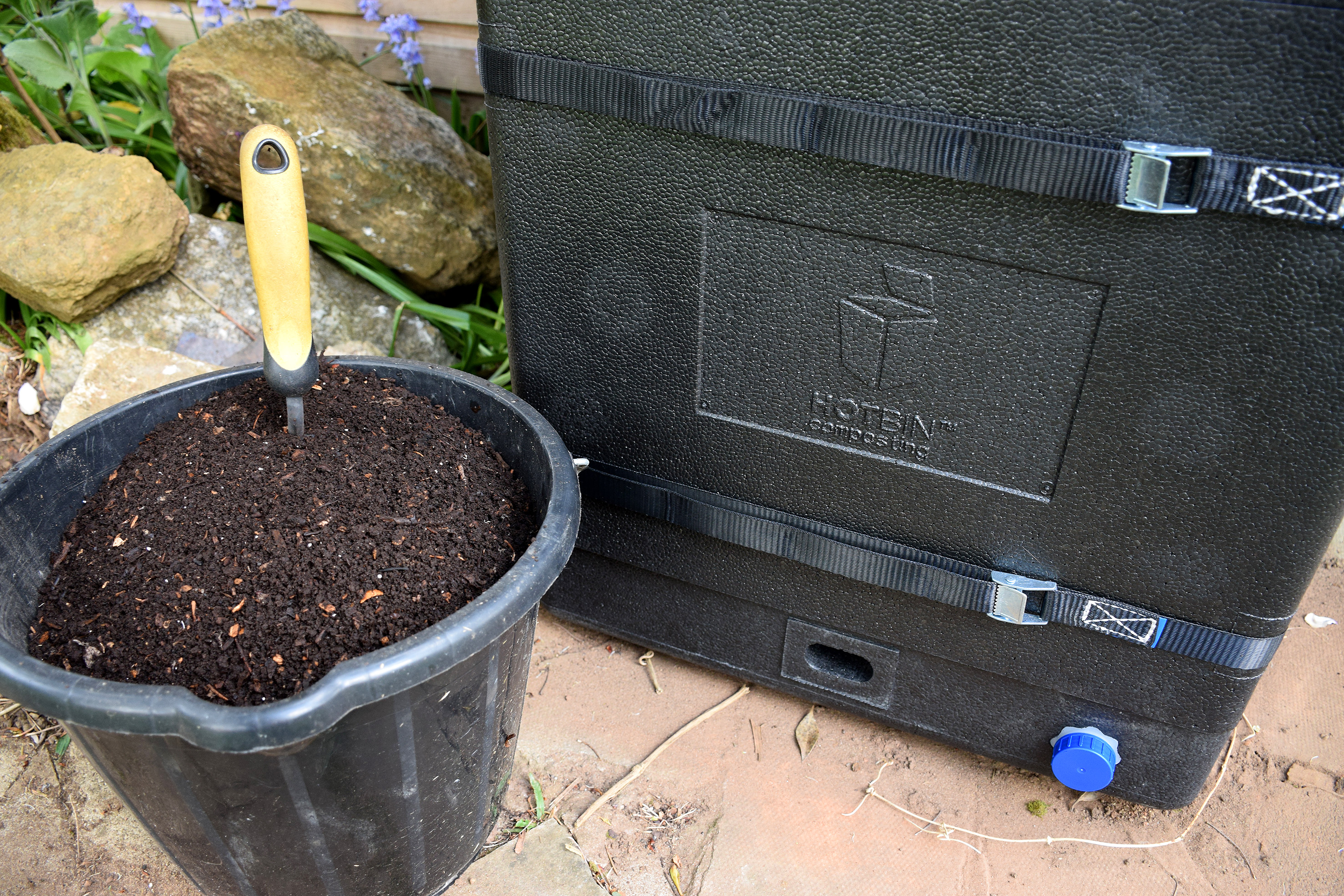
A HOTBIN can go on almost any flat, stable surface outdoors. Soil, grass, paving or patio all work, as long as the drainage underneath is not blocked. Sun or shade makes little difference, because the heat comes from the bacteria and not the weather. Do not put it in a shed or garage though. The moisture it gives off needs somewhere to drain away.
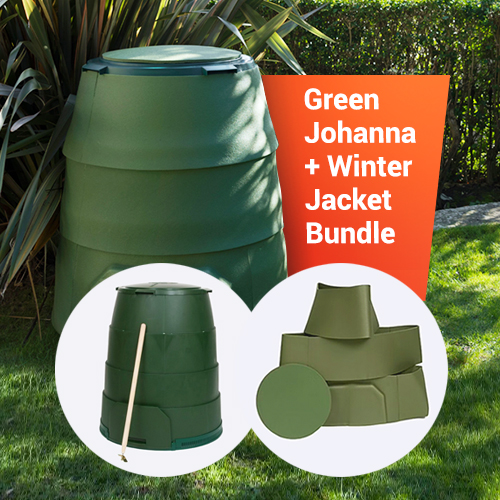
A Green Johanna likes things set up a little differently, and it is worth getting right. It does best in a shady, sheltered spot, sitting on soil or grass rather than a hard surface. That lets the liquid drain and lets worms and microbes come up through the base plate. Keep it out of strong sun and exposed wind and it holds its warmth and moisture beautifully. There is a lot more detail in my full Green Johanna guide.
The base layer, and why you should not skip it
The base layer is the most important part of starting well, and it is the step people rush.
For a HOTBIN, build a base of roughly 40cm of easy-to-digest waste. Veg peelings, fruit, grass clippings, that sort of thing. Mix in shredded paper for moisture and woodchip for air, at roughly five parts waste to two parts paper to one part woodchip. Mix it through rather than layering it. You want it loose, not packed down.
For a Green Johanna, start with a 10 to 20cm layer of coarse material right at the bottom. Twigs, small branches and woodchip are ideal. This keeps the air channels at the base open. Skip it and the vents block, the bin goes airless and smelly, and it stalls before it ever gets going. It is the most common Green Johanna setup mistake I hear about.
The first feeds
Once you are up and running, every feed is the same simple habit. Add your kitchen waste, then balance it.
Wet food on its own turns into a dense, airless sludge. So every time you add greens, add some browns with them. If you are not sure what counts as each, my guide to what you can compost breaks it down by waste type. In my HOTBIN I add about one handful of woodchip for every five handfuls of waste, every single feed. Never sawdust, as it is too fine and clogs the airflow. In a Green Johanna, add a layer of browns over the food, then give it a stir with the aerator stick to mix the fresh stuff into the layer below.
No woodchip to hand? Scrunched corrugated cardboard or chopped woody stems do a similar job. The point is rigid material that holds the pile open so air can still move through it.
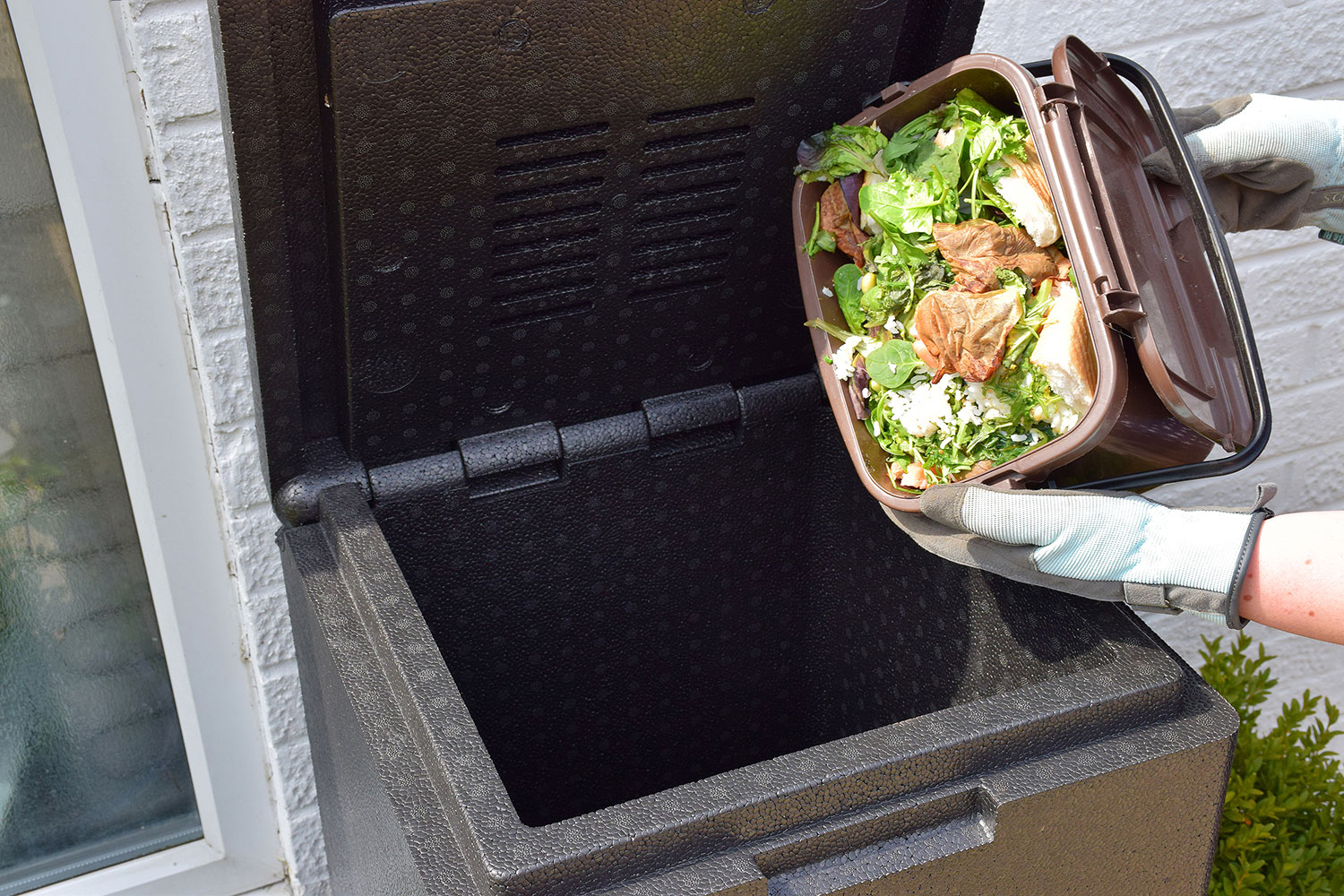
A few habits that make a real difference early on:
- Chop your waste into smallish pieces, roughly 3 to 4cm. More surface area means faster heating.
- Cap fresh food with a layer of browns or a little soil. That keeps the flies off.
- Keep a bag of browns right next to the bin. The moment you run out of woodchip or shredded card is the moment the bin starts to struggle.
- Do not compact it. Loose and fluffy holds the air.
What to watch in the first few weeks
Your bin will tell you how it is doing. You just need to know what to look for.
Temperature. This is your main success signal. On a HOTBIN the lid thermometer gives a quick read, but the probe pushed into the top few inches gives the real one. The top layer is always hottest and the base always runs cooler, which is normal. A few days after a good feed you want to see it climbing into the 40 to 60°C range. The first time I saw steam coming off the top of mine on a cold morning, with the probe reading around 60°C, I knew it had properly kicked in.
Smell. A healthy hot bin smells earthy, a bit like a forest floor. A sharp ammonia smell means too much green. A rotten, eggy smell means it has gone airless and too wet.
Moisture. Squeeze a handful. It should feel like a wrung-out sponge. Dripping wet is too far one way, dusty and dry is too far the other.
Flies. A few are normal. A cloud of them usually just means food is sitting exposed on the surface.
Reading early performance and adjusting
This is the bit that separates the people who give up from the people who get great compost. Almost every early problem comes down to one of those four needs being off. Here is how I work through it.
Cold, but there is plenty of fresh waste in there. This is nearly always an air problem. The material has packed down and oxygen cannot get through. Add more woodchip or coarse browns, and loosen the top with a fork or the stick.
This was my own hard lesson when I started. I had a bin sit stone cold for a fortnight. I kept feeding it, thinking more food would fix it, when the real problem was bulk. As soon as I sorted the woodchip, it came back to life within days.
"If I could give one tip to everyone with a hot bin, it is this. Air matters more than anything. Most cold bins are not short of food, they are short of oxygen." — Adam, Compost Guy
Cold, and the contents look dry or full of browns. It needs nitrogen and a bit of moisture. Add fresh greens like food waste or grass. With a Green Johanna you can add a little water if it is genuinely dry. With a HOTBIN, add wet fresh waste and a bit of paper rather than pouring water in.
Smelly and wet. Too much green and not enough air. Add plenty of dry browns, then mix well to get air back through it.
Flies on the surface. Cap every feed with browns or soil, and check the lid is sealed.
Be patient with the timings
A hot composter is fast compared to a cold heap, but it is not instant. The first batch always takes the longest, because you are still building it up.
A HOTBIN gives you rough, mulch-like material in around 30 days once it is established, and finished compost from that first base layer in about 90 to 120 days. A Green Johanna usually takes around 4 to 6 months for its first compost. After that, both speed up. So do not judge it in week one. The early days are about getting it hot and keeping it hot, not harvesting.
A quick word on winter
Hot composting slows down when it gets cold, but you can keep it going.
My Green Johanna has the Winter Jacket on it, and it makes a real difference once the cold sets in. Through the colder months I just kept feeding and aerating the same as I do in summer, and it kept ticking over nicely. For a HOTBIN, if the inside drops below about 15°C, the kick-start hot water bottle brings the bacteria back to life.
There is a lot more to it than that, including the browns shortage that catches people out every autumn and what to do about rats. I have covered the whole thing in my guide to composting in winter.
Start it right, keep half an eye on those four things, and a hot composter is genuinely low effort for what you get back. Mine take me a couple of minutes a day at most, and the compost more than pays for the attention.
Further reading
- Composting in winter: how to keep your bin working
- Greens and browns: a proper guide for hot composters
- Green Johanna 330L Hot Composter: a complete guide
- HOTBIN MK2 200L Hot Composter
- What can I compost
I'm Adam, the founder of Compost Guy. I'm passionate about empowering people to embrace composting! Whether you're a seasoned composter or just starting your journey, I'm here to help.


